


The Difference Between TALALAY Latex and Memory Foam
Both TALALAY latex rubber and memory foams are marketed as the premium materials for mattresses, but theyacirc;#128;#153;re hardly the same. In fact, the two materials are actually opposites in many ways. And your experience of sleeping on them couldnacirc;#128;#153;t be more different! Here are some critical ways these materials differ from one another:
- TALALAY Latex is a rubber. Memory foam is a foam.
- TALALAY Latex rubber is a natural material derived from the Hevea tree. Memory foam is a synthetic material and is a petroleum-based product.
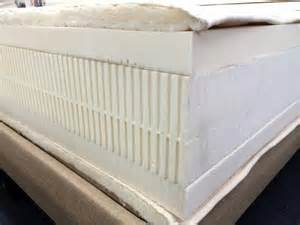
- TALALAY Latex rubber has a breathable design and cell structure that provides a temperature neutral environment. Memory foam is a dense material, which needs heat to activate its pressure relieving quality. It usually sleeps warmer.
- You acirc;#128;#156;sleep onacirc;#128;#157; TALALAY Latex rubber and it has an uplifting effect. You acirc;#128;#156;sleep inacirc;#128;#157; memory foam which provides a acirc;#128;#156;sinkingacirc;#128;#157; effect.
- TALALAY Latex rubber is a two dimensional material. It is both supportive by being uplifting and is also pressure relieving. Most memory foam mattresses use memory foam in the pressure relief layer and traditional poly foam in the support layer.
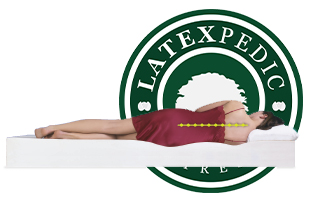
- TALALAY Latex rubber is acirc;#128;#156;bottomless.acirc;#128;#157; Even when you lay on your side, your body does not acirc;#128;#156;bottom outacirc;#128;#157; into a hard layer in the mattress or on the foundation. Memory foam allows you to bottom out onto what is underneath it.
- TALALAY Latex rubber is a fast response material. When you move, it immediately responds to your new position. Memory foam is a slow response material.
- TALALAY Latex rubber is hypoallergenic and does not off-gas. Memory foam is a petroleum-based product.
- TALALAY Latex rubber is extremely durable. Because it is vulcanized, it is the most resilient material available in a mattress.
- TALALAY Latex rubber is
antibacterial and antifungal
Pure TALALAY Relax amp; Relieve
The most important thing a Pure LatexBLISS mattress does is help relax muscles, which relieves tension. Spinal alignment is important when selecting a mattress but buying a mattress that helps muscles relax is equally as important. If we buy a mattress that creates pressure on our body, that pressure will cause our muscles to be tense and can even pull our spine out of alignment.
One of the common problems of our generation is that our muscles are too tense. This is one of the reasons why massage is at an all time high. The primary cause of muscle tension is stress. Followed by poor posture, prolonged sitting and inappropriate sleep surfaces.
If we allow our muscles to relax, our body will relax including our overstressed mind. Relaxing our muscles can help relieve stress, manage anxiety, relieve stiffness, control blood pressure and boost immunity. Insomnia often comes from the inability of our muscles to relax. Chronic muscle tension also uses up energy, which can make us fatigue easier during the day.
Pure LatexBLISS mattresses allow your muscles to relax by providing uplifting support and a pressure-less feel. Many describe it as being the same sense of floating, being suspended. It is a difference you can feel.
Muscle relaxation occurs based on the round cell structure of the TALALAY Latex rubber in a Pure LatexBLISS mattress. An all-TALALAY Latex mattress allows your body to be lifted back up to the surface instead of sink down into the mattress and bottom out like fiber and foam do. This pressure-less feeling helps relieve tension by completely relaxing your muscles.
Pure TALALAY Good for the Environment
Bliss is both the healthy and environmentally conscious option. All our beds are made with Natural TALALAY Latex Rubber, which starts as sap from the Hevea Tree. These trees have a 25 year productive life and a strong effect on the environment as they quickly absorb carbon dioxide from the atmosphere and help reduce greenhouse emissions.
The TALALAY process features natural, biodegradable ingredients that come from renewable resources and water-based raw materials: natural latex, air, and water. TALALAY Latex Rubber is made using an Eco-Friendly Production Method that does not use solvents and does not damage the ozone layer. The manufacturing process does not require external filtration, as it does not emit harmful elements into the air. Latex Internationalacirc;#128;#153;s TALALAY Latex is certified by Oeko-Tex (Europeacirc;#128;#153;s highest environmental consumer product standard) to be free of harmful substances and chemicals.
From a carbon footprint standpoint, the majority of our assembly facilities are next to a Latex International Latex Cutting Facility. This means trucks do not haul mattress cores from a Latex Plant to our assembly facilities. Reducing this step not only saves you cost and makes our operation more efficient, but itacirc;#128;#153;s good for the planet. There are a lot of latex mattress brands that are also good for the environment. What sets Bliss apart is that we havenacirc;#128;#153;t just kept the plant in mind acirc;#128;#147; weacirc;#128;#153;ve also designed a mattress thatacirc;#128;#153;s healthy for you. Our quilt free, fiber free, upholstery foam free design offers many health benefits:
- Natural TALALAY Latex Rubber is Naturally Breathable which dissipates body heat.
- Itacirc;#128;#153;s Mold and Mildew Proof which can provide an allergen free environment.
- Itacirc;#128;#153;s Dust Mite Resistant which can prevent runny noses, nasal congestion, or asthma attacks caused by dust mite manifestation.
- Itacirc;#128;#153;s Antibacterial and Antifungal which may reduce the spread of bacteria.
- Itacirc;#128;#153;s Naturally Hypoallergenic because it does not produce toxic off-gases.
- Itacirc;#128;#153;s extremely resilient and durable for lifetime performance.
For more information about Oeko-Tex standards, visit these sites:
Oeko-Tex
Oeko-Tex Standard on Wikipedia100% Pure TALALAY: The Important Questions
Shopping for latex beds can sometimes be confusing. Not all latex mattresses are the same acirc;#128;#147; in fact, some arenacirc;#128;#153;t even really latex! Itacirc;#128;#153;s important to compare the various models to make sure youacirc;#128;#153;re getting the one you want. Here are some key questions to ask that will make shopping for a latex bed simple.
How many inches of latex rubber is in the mattress?
There are 11acirc;#128;#157; mattresses with 3 inches of latex in them (and the remainder foam or other things) and there are 11acirc;#128;#157; mattresses with 11acirc;#128;#157; of latex in the mattress. There is a huge difference between the two, both from a construction and a benefit standpoint.What kind of Latex is used: TALALAY or Dunlop?
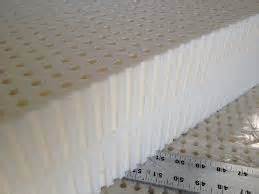
TALALAY Latex Rubber is made in a vacuum mold that both freezes and vulcanizes the material and requires over 14 hours to manufacture. The TALALAY process produces a circular cell structure. Dunlop latex is latex that is manufactured like foam on a line and takes less than one hour to make and produces a snowflake cell structure.Where is the Latex made?
Latex made in the United States is superior to most processes around the world. The primary difference is the cleanliness of the material produced. TALALAY Latex made in the United States is rinsed five times to remove proteins. TALALAY Latex made in most parts of the world is rinsed only once or not at all.What is the Latex Rubber blend?
The industry has two latex classifications: acirc;#128;#156;Naturalacirc;#128;#157; and acirc;#128;#156;All Natural.acirc;#128;#157; acirc;#128;#156;Naturalacirc;#128;#157; blends deliver the healthy benefits of latex and provide more comfort, more pressure relief and are more durable. acirc;#128;#156;All Naturalacirc;#128;#157; latex is more natural and purer, although it is also harder, heavier, more expensive, and not as durable.Where is the Latex in the mattress?
The closer the latex is to the surface of the mattress, the healthier the mattress. If there is anything on top of the latex in the construction, the bed will not be as breathable, mold and mildew proof, dust-mite resistant or pressure relieving.Is it really a acirc;#128;#156;Latexacirc;#128;#157; bed? acirc;#128;#168;Itacirc;#128;#153;s important to be able to discern a acirc;#128;#156;latex mattressacirc;#128;#157; from a acirc;#128;#156;mattress with latex in it.acirc;#128;#157; A lot of mattresses categorized as acirc;#128;#156;latex mattressesacirc;#128;#157; are not. Many contain very little latex (less than 25%) and the design of the mattress either waters down the benefits of latex or dilutes them all together. The law label is a great guide to understand the latex content in any brand mattress. The more latex in a mattress, the more support, pressure relief, durability, and resilience it offers.
100% Pure TALALAY: A Two Dimensional Material
Most people think of mattresses as being firm, plush or something in between. However, great sleeping mattresses actually are about being more than firm, medium or plush. Mattresses designed for great sleep have two necessary components; a support function and a pressure relief function.
Support is what holds you up. It is what keeps your skeletal structure aligned. Proper support means proper posture. If you wake up and need to stretch out, get the kinks out, or snap your neck, you may not have proper spinal alignment for almost a full third of your day. A lot of people believe that a bed should be firm to be good for your back, but support is only part of the story.
Pressure Relief is achieved when you sink into a mattress a bit. Sometimes it is mislabeled comfort. Comfort is personal and subjective, pressure relief is scientific and objective. It can be measured. In fact, in burn units and wheelchair cushions it is often measured. Proper Pressure Relief means blood flows to your extremities, which can keep you from tossing and turning as much at night interrupting your sleep. I read this fact the other day, when you lay on your side, your shoulders and hips have SEVEN TIMES more pressure on them than when you lay on your back. Sometimes, this is why people wake up with numb fingers, arms or feet.
This is the most important point; a mattress needs to be both supportive and pressure relieving.
Most materials in a bed are either one or the other. For example, most coils are supportive. Most foams are pressure relieving. Fiber is neither, it is merely a filler to produce an aesthetic effect. Most mattresses have a combination of both coils and foams for that reason.
Natural TALALAY Latex Rubber is different. TALALAY Latex when used though out the mattress is both supportive and pressure relieving at the same time. It is naturally a two dimensional material. That means the more TALALAY Latex is in a bed, the more supportive it is AND the more pressure relieving it is.
In traditionally designed mattresses, there is a tradeoff between support and pressure relief. The firmer the mattress is, the less pressure relieving it is. The softer it is, the less supportive it is. In Natural TALALAY Latex Mattresses, you donacirc;#128;#153;t have to tradeoff. You can have both. Natural TALALAY Latex has uplifting support and bottomless pressure relief.
Latex Foam Buoyant or Bouncy?
Old school: Land line. New school: Cell Phone.
Old school: Snail Mail. New school: Email/Text.
Old school: Latex is bouncy. New school: Latex is buoyantOne of the greatest lessons we learned when we introduced Pure LatexBLISS in Europe was that we redefined the"feel" of Latex overnight. Before we introduced Pure LatexBLISS, if you asked anyone, anywhere in the world what latex "felt" like compared to other foam beds, they would tell you three things: Latex is the most expensive material in a mattress, Latex is a natural material instead of a petro-chemical, and Latex has a "bouncy" feel.
All of these things were true because of the wayLatex beds had been built and what they were built with.
For over fifty years, most Latex Beds were made to provide great support but did not add pressure relief layers on top of that. Literally, the mattresses were 6-8" high and had little or no pressure relief layers on top. A Latex bed with only a support layer tends to be quite bouncy.
For over fifty years, many Latex Beds were made with Dunlop process Latex which is firm by itacirc;#128;#153;s very nature. The"line" process is not conducive to making pressure relief levels of Latex. Dunlop process Latex tends to be quite bouncy.
For over fifty years, even TALALAY Latex Beds were made with constructions that used only firm ILDs (densities) of Latex and a limited number of layers in the design. Using firm ILDs and one or two layers in the mattress design tends to be a quite bouncy feel.
For over fifty years, practically every Latex Bed available anywhere in the world was built with a quilted panel on top of the mattress hiding the true experience of Latex. If a Latex bed has a quilted top panel, it tends to feel quite"bouncy."
With Pure LatexBLISS bed designs bouncy is gone and buoyant is in.
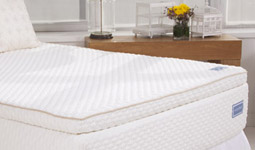
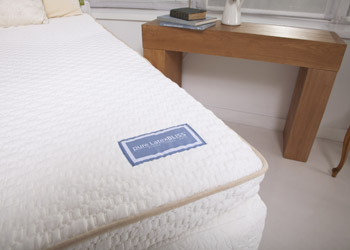
We build a support layer and a pressure relief layer into all of our beds. The pressure relief layer is important to your body and your sleep, but it also makes the bed more comfortable. We use Natural TALALAY Latex Rubber in every bed. We use multiple layers of Latex with different ILDs in every model and we never quilt the top of mattress because it takes away the amazing latex feel, causes body impressions in the top of the mattress, and is not as healthy for you to sleep on. The result: When we ask customers and retail sales associates what our beds feel like, these are the words they use: buoyant, floating, uplifted.
LATEX BLISS PAMPER MATTRESS
With a firm, supportive feel, this all-latex design is a great bed for those who like to sleep on a firmer sleeper surface or an ideal base for customizing your own design with one of our Removable Pillowtops.
Plushness Rating: 4
Mattress Design:
- 8" Mattress Height
- 2" Pressure Relief Layer: TALALAY Latex
- 6" Support Core: TALALAY Latex
Made in the USA
Features:
- 20 Year Non Prorated Warranty with a 3/4" Indentation Limit
- OekoTex Certified TALALAY Latex
- OekoTex Certified Fabric
- ActiveFUSION Climate Control Phase Change Technology in the Cover and Top Latex Layer. ActiveFUSION can help keep a warmer sleeper slightly cooler and a cooler sleeper slightly warmer through the night by moving the heat to or away from the body as needed for each sleeper throughout the night
- 400+ Gram Weight Washable/ Removable Cover
- Natural TALALAY Latex: Non Toxic, Allergen Free, Dust Mite Resistant, Antibacterial, Breathable
LATEX BLISS NATURAL
This all-latex mattress design delivers a harmonious balance with a firm base layer topped by a luxurious TALALAY Latex top that reduces pressure and relaxes muscles
Plushness Rating: 7
Mattress Design:
- 10" Mattress Height
- 4" Pressure Relief Layer: TALALAY Latex
- 6" Support Core: TALALAY Latex
LATEX BLISS NUTRITION
-
With a firmer TALALAY latex base layer, the all-latex Nutrition offers a more European feel that provides a deal balance of support and muscle relaxation.
Plushness Rating: 8
Mattress Design:
- 11" Mattress Height
- 5" Pressure Relief Layer: TALALAY Latex
- 6" Support Core: TALALAY Latex
-
-
LATEX BLISS BEAUTIFUL
-
Mattress Design:
- 12" Mattress Height
- 6" Pressure Relief Layer: TALALAY Latex
- 6" Support Core: TALALAY Latex
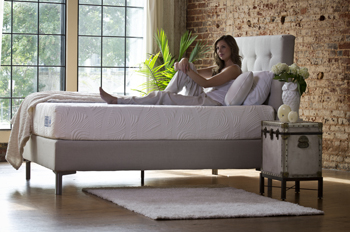
LATEX BLISS WORLD'S BEST BED
-
Our signature design, offers a plush Cloud-like surface feel that is simply magical. The unique layers of TALALAY latex deliver unparalleled support and pressure relief.
Mattress Design:
- 12" Mattress Height
- 6" Pressure Relief Layer: TALALAY Latex
- 6" Support Core: TALALAY Latex
-